


Best Lawn Fertiliser for NZ Lawns: Granular, Liquid or Foliar?
Choosing the best lawn fertiliser can be confusing. Should you use granular fertiliser, a liquid feed, a foliar treatment or simply add iron?
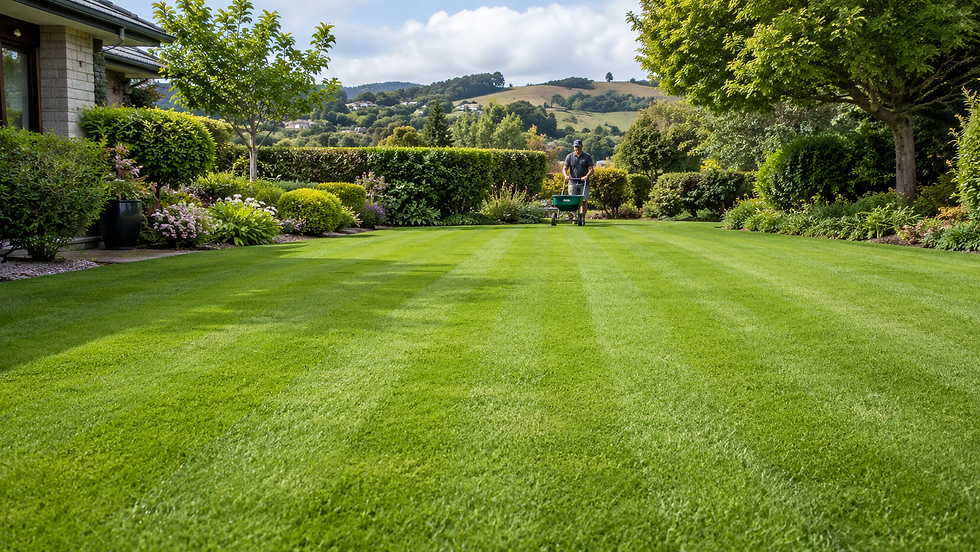
For most established New Zealand lawns, a slow-release granular fertiliser is the best foundation. Liquid and foliar fertilisers are useful when you want a faster response, while specialised products such as iron or renovation fertiliser are better suited to specific lawn problems.
The right choice depends on the condition of your lawn and the result you want.
What Is the Best Lawn Fertiliser in NZ?
There is no single fertiliser that is best for every lawn.
A healthy established lawn needs something different from a recently renovated lawn or grass that has become pale and yellow.
As a general guide:
Lawn goal | Recommended option |
General lawn maintenance | |
Darker green colour | |
Lawn recovery or renovation | |
Fast liquid feeding | |
Rapid foliar boost | |
Correcting yellowing or iron deficiency |
Many lawn owners get the best results by using a granular fertiliser as their main feed, then supplementing it with liquid or foliar fertiliser during periods of active growth.
Granular vs Liquid vs Foliar Lawn Fertiliser
Each type of fertiliser has a different role.
Granular lawn fertiliser
Granular fertiliser is spread evenly across the lawn and usually watered into the soil.
It is generally the best option for long-term lawn nutrition because slow-release products can continue feeding the grass for several months.
Granular fertiliser is ideal when you want:
Consistent, sustained feeding
A strong foundation for lawn maintenance
Fewer fertiliser applications
Even growth across a large lawn
Green Fingers Lawn Plus and Lawn Pro are slow-release granular fertilisers designed to feed for up to three months.
The main drawback is that granular fertiliser must be spread evenly. Heavy patches can lead to uneven growth or fertiliser burn, so using a spreader is recommended.
Liquid lawn fertiliser
Liquid fertiliser is diluted with water and applied using a sprayer or watering equipment.
It becomes available to the grass more quickly than a slow-release granular feed, making it useful when the lawn is actively growing or needs a faster nutritional boost.
Liquid fertiliser is ideal when you want:
Faster results
More control over feeding frequency
Extra nutrition between granular applications
An easy way to feed during spring or autumn growth
Green Fingers LawnPlus Liquid Fertiliser has an NPK ratio of 16-2-4 and is designed to support growth, root health and lawn colour.
Foliar lawn fertiliser
Foliar fertiliser is sprayed directly onto the grass leaves, allowing nutrients to be absorbed through the leaf surface.
This makes foliar feeding useful for fast colour improvement and ongoing lawn maintenance.
Foliar fertiliser is ideal when you want:
Rapid nutrient uptake
Better lawn colour
A boost between granular applications
Greater control over growth and appearance
Green Fingers Lawn Foliar Fertiliser contains both major nutrients and micronutrients, along with iron to support a deeper green colour.
Foliar fertiliser works best as a supplement to granular feeding rather than a complete replacement.

Which Green Fingers Lawn Fertiliser Should You Use?
Best all-round option: Lawn Plus Granular
Lawn Plus Granular is a strong everyday choice for established lawns.
It has an NPK ratio of 13-2-6 and contains amino acids, humic acid and fulvic acid. It is designed to provide steady nutrition for up to three months.
Choose Lawn Plus if you want a simple, long-lasting fertiliser for general lawn maintenance.
Best for deeper green colour: Lawn Pro Granular
Lawn Pro is a premium slow-release option containing added iron.
Its 13-1-10 formulation provides sustained nutrition, while the iron helps produce a darker green finish.
Choose Lawn Pro if lawn colour is a priority or you maintain a thick, closely cut lawn.
Best for damaged lawns: Lawn Rejuvenate
Lawn Rejuvenate is designed for lawns recovering from renovation, wear or damage.
It contains calcium, gypsum and a wetting agent, helping support soil structure, moisture movement and turf recovery.
Choose Lawn Rejuvenate after scarifying, aerating, overseeding or repairing a tired lawn.
Best fast liquid feed: LawnPlus Liquid
LawnPlus Liquid is useful when the lawn is actively growing and you want a faster nutritional response.
It can be used during spring and autumn or between longer-lasting granular applications.
Best foliar boost: Lawn Foliar Fertiliser
Lawn Foliar Fertiliser is suited to lawns needing a quick lift in colour and nutrition.
It is particularly useful for maintaining high-quality lawns or supplementing a granular fertiliser programme.
Best for pale or yellow grass: Liquid Iron
Liquid Iron is designed to correct iron deficiency and improve lawn colour.
It is useful when grass appears yellow or washed out despite receiving adequate general fertiliser.
Iron should normally be used as a supplement rather than as a replacement for balanced lawn nutrition.

When Should You Fertilise a Lawn in New Zealand?
Spring and autumn are usually the most important feeding periods because grass is actively growing.
In spring, apply a granular fertiliser to support recovery and new growth. A liquid or foliar feed can then be used as needed through the growing season.
In autumn, fertiliser can help the lawn recover from summer stress and prepare for winter. Autumn is also a good time to renovate tired lawns.
Summer feeding should be approached carefully. Avoid heavily fertilising dry or drought-stressed grass, and make sure the lawn has sufficient moisture.
During winter, growth may slow significantly, particularly in colder areas. Reduce feeding if the lawn is dormant, waterlogged or regularly affected by frost.
Common Lawn Fertilising Mistakes
Avoid these common errors:
Applying more than the recommended rate
Spreading granular fertiliser unevenly
Failing to water granular fertiliser in
Fertilising drought-stressed grass
Spraying foliar fertiliser immediately before rain
Treating iron as a complete lawn fertiliser
Always measure the lawn area and follow the product instructions.
Frequently Asked Questions
Is granular or liquid lawn fertiliser better?
Granular fertiliser is generally better for long-term feeding, while liquid fertiliser is better for a faster response.
For many lawns, the best approach is to use both: granular fertiliser as the foundation and liquid or foliar fertiliser as a supplement.
How often should I fertilise my lawn?
Slow-release granular fertilisers may continue feeding for up to three months. Liquid and foliar products can be used more frequently during active growth, depending on the product directions.
What fertiliser makes grass dark green?
Nitrogen supports healthy green growth, while iron can produce a deeper green colour.
Lawn Pro Granular, Lawn Foliar Fertiliser and Liquid Iron are all suitable options when colour is a priority.
Can lawn fertiliser burn grass?
Yes. Fertiliser burn can occur when too much is applied, when granules are spread unevenly or when fertiliser is not watered in correctly.
Final Recommendation
For most established New Zealand lawns, Lawn Plus or Lawn Pro provides the best long-term foundation.
Use Lawn Rejuvenate for damaged or recently renovated lawns, LawnPlus Liquid or Lawn Foliar Fertiliser for faster feeding, and Liquid Iron when poor colour or yellowing is the main concern.
The best lawn-feeding programme usually combines the right fertiliser with sensible mowing, watering and seasonal maintenance.
