


National Gardening Month Has Arrived — 10 Jobs for Your NZ Garden This October

October has always been one of the busiest months in the New Zealand gardening calendar.
This year, there's another reason to get outside.
For the first time, October is being celebrated as National Gardening Month across New Zealand, expanding the country's long-running National Gardening Week into a full month dedicated to getting Kiwis growing.
The theme for 2026 is "Grow a piece of paradise", and the idea is deliberately broad.
Your piece of paradise might be a large vegetable garden, a lawn surrounded by flower beds, a collection of pots on a balcony, a few herbs outside the kitchen or simply one new plant.
The expansion to an entire month recognises something gardeners already know — creating a great garden doesn't happen in a single weekend.
And with spring now well underway, October couldn't be a better time to get started.
From National Gardening Week to National Gardening Month
National Gardening Month is an initiative supported by New Zealand's plant production and gardening industry.
After years of National Gardening Week, the event has been expanded for 2026 to give people more time to visit garden centres, attend gardening events, plant something new and simply spend more time outside.
It's also about encouraging people who don't necessarily think of themselves as gardeners.
You don't need a huge section or an immaculate garden.
A vegetable planter, strawberry pot, herb garden, hanging basket or even a sunny windowsill can be enough to start growing something.
So, with an entire month to work with, what should you actually be doing in the garden?
Here are 10 jobs worth tackling this October.
1. Get Your Vegetable Garden Ready for Summer
October is when the vegetable garden really begins to come alive.
Depending on where you live, crops such as lettuce, beetroot, carrots, spring onions, peas and many herbs can be sown or planted now.
Warmer parts of New Zealand can also begin moving into summer crops, while gardeners in cooler regions may need to remain patient with frost-sensitive plants.
Before planting, spend some time preparing the soil.
Remove weeds, loosen compacted areas and incorporate compost or organic matter where needed.
If the same vegetable garden has been producing crops for several seasons, remember that harvesting vegetables continually removes nutrients from the soil.
Replacing those nutrients is an important part of preparing for another productive growing season.

2. Don't Rush Tomatoes, Chillies and Other Warm-Season Crops
A few warm October days can make summer feel as though it has already arrived.
That doesn't necessarily mean your soil agrees.
Tomatoes, chillies, capsicums, cucumbers and other warm-season plants perform best once conditions have genuinely warmed.
In many parts of New Zealand, Labour Weekend remains a useful traditional guide for planting tomatoes outdoors. In colder areas, including parts of Canterbury, Otago and Southland, gardeners may need to wait longer if frost remains a possibility.
There's very little advantage in putting a heat-loving plant into cold soil where it simply sits and struggles.
Watch your local conditions rather than relying entirely on the calendar.
3. Feed Plants That Are Putting On Strong Spring Growth
Look around the garden in October and you'll see just how quickly things are changing.
Perennials are emerging, shrubs are producing new leaves, fruit trees are flowering or beginning to set fruit and established garden plants are rapidly increasing in size.
All of that growth requires nutrients.
If you haven't already applied your spring fertiliser, October is a good time to assess which parts of the garden need feeding.
The important thing is to match the fertiliser to the plant rather than simply applying the same product everywhere.
Leafy plants have different nutritional demands from heavily flowering plants, while fruiting crops have different requirements again as they progress through the season.
And remember that more isn't better.
A sensible feeding programme provides plants with what they need without continually adding unnecessary fertiliser.
4. Stay Ahead of the Weeds
Unfortunately, your garden plants aren't the only things enjoying spring.
October can produce explosive weed growth as warmer soil temperatures combine with spring moisture.
Small weeds are considerably easier to deal with than large ones, so this is one job where procrastination really does create more work.
Pull, hoe or otherwise control weeds while they're young and before they begin flowering and setting seed.
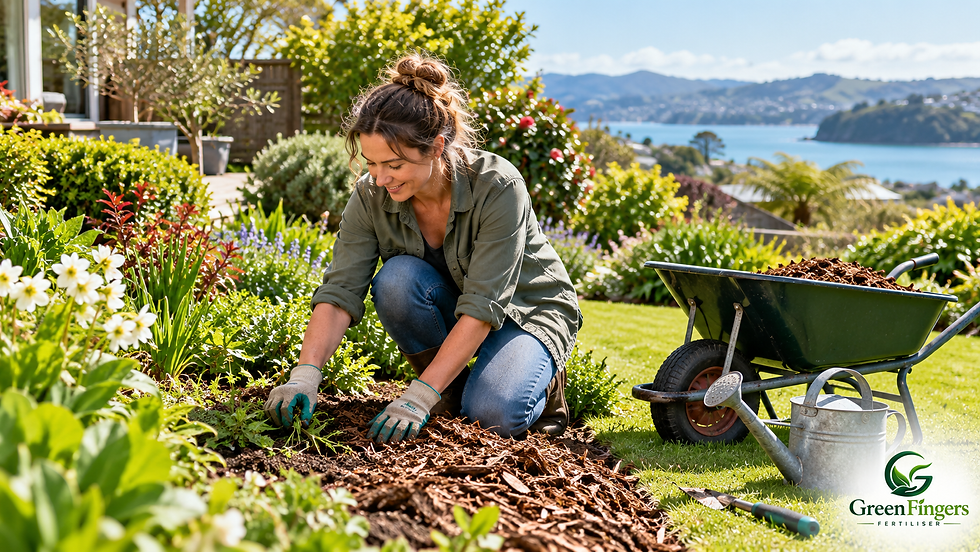
Once the ground is clean, adding mulch around suitable garden plants can help suppress further weed germination while also reducing moisture loss as we head towards summer.
5. Check Your Mulch Before the Weather Gets Hotter
Mulching is one of those jobs that's much easier to do before you desperately need it.
A layer of mulch can reduce evaporation from the soil, moderate soil temperature and suppress weeds.
That's particularly relevant this spring.
Current forecasts for the 2026/27 growing season indicate that El Niño could bring stronger winds and drier conditions to parts of New Zealand. Preparing the soil to retain moisture now could make garden management considerably easier later in the season.
Apply mulch while the soil still contains good moisture rather than waiting until the ground is already dry.
Just avoid piling mulch directly against plant stems, trunks or crowns.
6. Give Your Lawn Some Attention
Lawns are also entering a period of strong growth.
If winter has left yours thin, pale or patchy, October still provides a good opportunity to encourage recovery before summer.
Mowing regularly will encourage a denser lawn, but avoid scalping it extremely short.
Spring is also an important feeding period because actively growing grass is using nutrients to produce new leaf and root growth.
If you're fertilising, apply the product at the recommended rate and water granular fertilisers in where required.
This is also a good time to look for compacted areas, bare patches and drainage problems rather than waiting until hot summer weather places the lawn under additional stress.
7. Look After Your Emerging Dahlias and Peonies
Some of the most exciting growth in the October garden is happening surprisingly quickly.
Dahlias are beginning to emerge in many areas, while peonies are already well into their spring growth cycle.
Keep the area around emerging shoots relatively clear and avoid accidentally damaging new growth while weeding.
Tall-growing plants can also benefit from supports being installed early.
It is much easier to put a support around a young plant now than wrestle with a metre-tall plant covered in foliage and flower buds later.
For peonies in particular, continue watching for botrytis and other fungal problems around young growth, especially during periods of cool, damp weather.

8. Keep an Eye Out for Spring Pests
More plant growth inevitably means more food for pests.
Aphids, slugs, snails and other garden pests can become increasingly noticeable through October, particularly around soft new shoots and young vegetable seedlings.
Check plants regularly rather than waiting until the damage becomes obvious from across the garden.
Look underneath leaves, around growing tips and around seedlings.
Early intervention is usually considerably easier than trying to control a large infestation later.
It's also worth remembering that not every insect in your garden is a pest.
Spring brings increasing numbers of bees, hoverflies and other beneficial insects, so identify what you're dealing with before reaching for a treatment.
9. Plant Something for the Pollinators
National Gardening Month isn't only about growing plants for ourselves.
October is a great opportunity to add plants that provide food and habitat for bees and other beneficial insects.
A garden containing different flower shapes and plants that bloom at different times can provide a more continuous source of nectar and pollen throughout the growing season.
You don't need to transform the entire garden.
Even a few flowering herbs, perennials or suitable native plants can add another food source.
And if you're growing fruit trees, berries, courgettes, pumpkins or other crops that rely on insect pollination, encouraging pollinators has a very practical benefit too.
10. Plant Something New
Perhaps the easiest way to celebrate New Zealand's first National Gardening Month is simply to grow something you weren't growing before.
Try a vegetable you've never grown.
Plant some strawberries.
Start a herb garden.
Add another perennial to the flower bed.
Grow flowers for bees.
Plant a fruit tree you've been thinking about for years.
Or give someone else a plant and get them gardening too.
Gardens don't have to be finished projects.
Part of the enjoyment is that they're constantly changing, and October is one of the best months of the year to start something new.

A Whole Month to Grow Your Piece of Paradise
The move from National Gardening Week to National Gardening Month seems particularly appropriate.
Gardening isn't something we complete.
There's always another seed to sow, plant to feed, weed to pull, lawn to mow or corner of the garden that could be made just a little bit better.
And you certainly don't need to tackle all 10 jobs this weekend.
That's the point of having a whole month.
Choose a few jobs, spend some time outside and enjoy watching the garden change as New Zealand moves through spring and towards summer.
Whether your piece of paradise is a sprawling backyard or three pots outside the door, October is a pretty good month to help it grow.
