


The Ultimate Guide to Dahlia Flower Shapes: Understanding the Different Types of Dahlias
Dahlias are one of the world's most diverse and spectacular flowering plants. Originally native to Mexico and Central America, they have become a favourite of gardeners across New Zealand thanks to their extraordinary range of colours, sizes, and flower forms.
One of the most fascinating aspects of growing dahlias is discovering the incredible variety of flower shapes available. In fact, there are over a dozen officially recognised dahlia flower classifications, ranging from tiny pompon blooms the size of a golf ball to enormous dinner plate varieties exceeding 30cm across.
Whether you're planting your first dahlia tuber or expanding an existing collection, understanding the different flower forms will help you choose varieties that suit your garden style, growing conditions, and personal taste.
Quick Guide to Dahlia Flower Shapes
Flower Type | Typical Flower Size | Best For | Pollinator Friendly |
Decorative | 10–25cm | Garden displays | Low |
Dinner Plate | 20–30cm | Statement plants | Low |
Ball | 5–15cm | Cut flowers | Low |
Pompon | 2–5cm | Borders & bouquets | Low |
Cactus | 10–20cm | Dramatic displays | Low |
Semi-Cactus | 10–25cm | Garden impact | Low |
Waterlily | 8–15cm | Elegant gardens | Moderate |
Anemone | 5–12cm | Cottage gardens | High |
Collarette | 5–10cm | Pollinator gardens | Very High |
Single | 5–12cm | Wildlife gardens | Very High |
Peony | 8–15cm | Informal planting | High |
Orchid/Star | 5–12cm | Unique displays | Moderate |

Decorative Dahlias
Decorative dahlias are perhaps the most recognisable and widely grown dahlia type in the world. They produce fully double flowers with broad petals arranged in multiple layers, creating lush, luxurious blooms that make a dramatic statement in any garden.
Decorative dahlias are divided into two subcategories: formal decorative and informal decorative. Formal decorative varieties have perfectly arranged petals, while informal decorative types have slightly twisted or irregular petal arrangements that create a softer appearance.
These dahlias are particularly popular because they combine large flower size with excellent garden performance. Many produce dozens of blooms over a season and perform exceptionally well in New Zealand's climate.
Best for:
Show gardens
Cut flowers
Garden focal points
Beginners
Advantages:
Huge range of colours
Long flowering season
Excellent garden performance
Stunning cut flowers
Potential drawbacks:
Larger varieties require staking
Heavy blooms can suffer in strong winds
Popular decorative varieties:
Café au Lait
Thomas Edison
American Dawn
Arabian Night
Spartacus

Dinner Plate Dahlias
While "Dinner Plate" isn't an official classification, it is perhaps the most famous dahlia category among gardeners. These giant flowering varieties typically belong to the decorative or semi-cactus classes and produce flowers that can exceed 30cm in diameter.
Dinner plate dahlias create incredible visual impact. A single bloom can dominate an entire bouquet or become the centrepiece of a garden bed.
However, these spectacular flowers come with additional requirements. They typically need strong staking, regular feeding, and protection from heavy wind and rain.

Best for:
Statement gardens
Exhibition growing
Wedding flowers
Photography gardens
Advantages:
Massive blooms
Incredible visual impact
Highly sought after by florists
Potential drawbacks:
Require staking
Lower bloom numbers than smaller varieties
More susceptible to weather damage
Popular dinner plate varieties:
Café au Lait
Emory Paul
Penhill Watermelon
Fleurel
Kelvin Floodlight
Ball Dahlias
Ball dahlias produce beautifully symmetrical flowers composed of tightly arranged petals that curve inward, creating a nearly perfect sphere.
These varieties are favourites among commercial flower growers and florists due to their exceptional vase life, strong stems, and high productivity. Unlike giant decorative varieties, ball dahlias often produce a continuous display of flowers from summer until the first frost.
Their neat appearance also makes them highly versatile in garden design.

Best for:
Cut flower gardens
Wedding floristry
Beginners
Productive gardens
Advantages:
Excellent vase life
Strong stems
High flower production
Weather resistant
Potential drawbacks:
Smaller flowers than decorative types
Less dramatic from a distance
Popular ball varieties:
Cornel
Jowey Winnie
Sylvia
Ivanetti
Petra's Wedding
Pompon Dahlias
Pompon dahlias resemble miniature ball dahlias, producing perfectly spherical flowers typically measuring less than 5cm across.
Their compact blooms create a delicate, refined appearance that works beautifully in borders, containers, and floral arrangements.
Despite their small size, pompon dahlias are often among the most prolific flowering varieties available.

Best for:
Container gardening
Cottage gardens
Floral arrangements
Border planting
Advantages:
Extremely productive
Long flowering period
Excellent for bouquets
Compact growth habit
Potential drawbacks:
Smaller visual impact
Can be overlooked in large gardens
Popular pompon varieties:
Franz Kafka
Small World
Sunny Boy
Little Robert
Cactus Dahlias
Cactus dahlias are instantly recognisable due to their narrow petals that roll backward along most of their length, creating dramatic spiky flowers.
Their unusual shape adds texture and movement to garden displays and creates striking floral arrangements.
Many gardeners become collectors of cactus dahlias because no other flower form offers quite the same dramatic appearance.

Best for:
Dramatic gardens
Modern landscapes
Cut flowers
Collectors
Advantages:
Unique appearance
Excellent visual texture
Large range of colours
Strong garden performance
Potential drawbacks:
Some varieties require staking
Can appear less formal
Popular cactus varieties:
Park Princess
Kennemerland
My Love
Karma Fuchsiana
Semi-Cactus Dahlias
Semi-cactus dahlias combine the broad petals of decorative dahlias with the dramatic points of cactus varieties.
Their petals remain broader at the base before tapering and rolling backward toward the tip. This creates flowers that are both elegant and striking.
Many experienced growers consider semi-cactus dahlias to offer the best balance between beauty and practicality.

Best for:
Mixed gardens
Cut flowers
Exhibition growing
Feature planting
Advantages:
Highly ornamental
Excellent flower production
Dramatic without being extreme
Potential drawbacks:
Often require staking
Large varieties need more space
Popular varieties:
Mingus Joshua
Hollyhill Black Beauty
Tsuki Yori No Shisha
Waterlily Dahlias
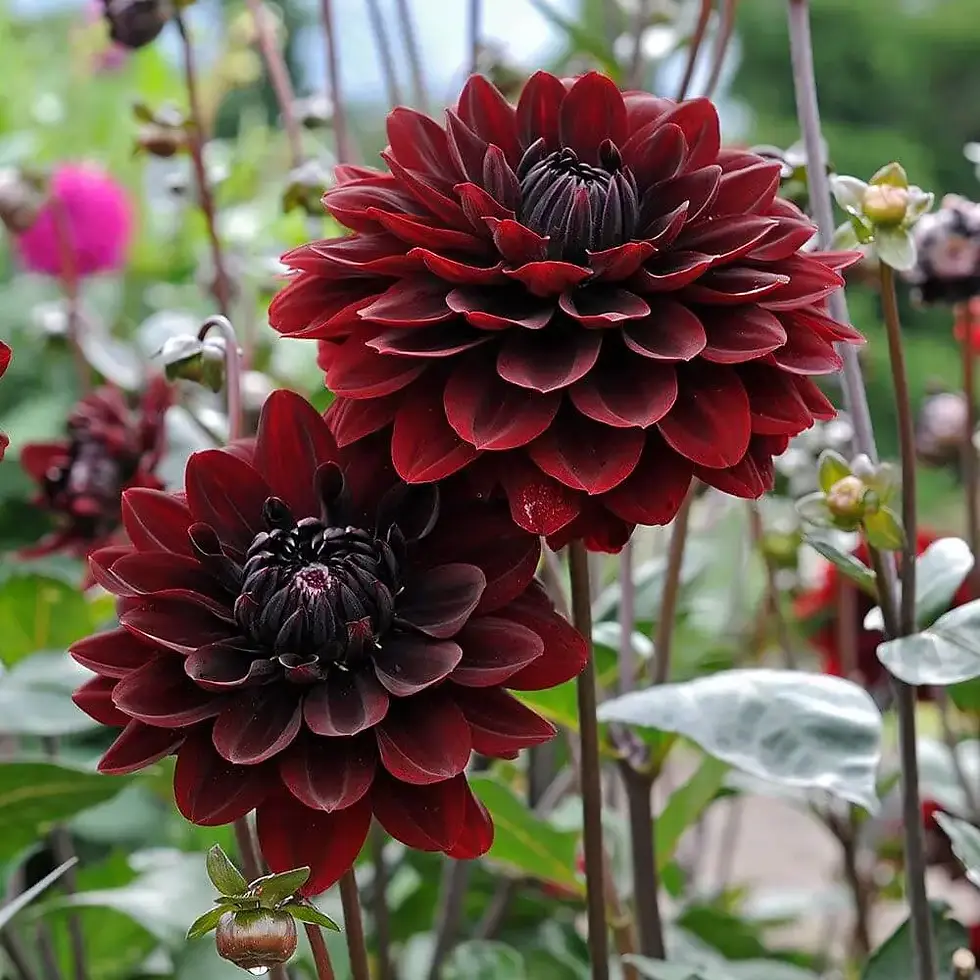
Waterlily dahlias produce elegant blooms with broad, slightly cupped petals arranged in a flattened shape resembling aquatic waterlilies.
These dahlias are prized for their sophistication and are favourites among floral designers due to their graceful appearance.
Their blooms often photograph exceptionally well and bring a softer aesthetic than many other dahlia forms.
Best for:
Elegant gardens
Wedding flowers
Exhibition growing
Cottage gardens
Advantages:
Refined appearance
Excellent cut flowers
Highly photogenic
Potential drawbacks:
Less dramatic than giant varieties
Some varieties flower less prolifically
Popular varieties:
Karma Choc
Rancho
Creme de Cognac
Gitts Perfection
Anemone Dahlias
Anemone dahlias feature one or more outer rows of petals surrounding a dense cushion-like centre composed of tubular florets.
This unusual structure creates a playful and distinctive appearance that stands out in mixed plantings.
Their partially open flowers also provide greater value for pollinators than many fully double varieties.

Best for:
Cottage gardens
Pollinator gardens
Mixed borders
Advantages:
Unique appearance
Pollinator friendly
Excellent garden plants
Potential drawbacks:
Less common and sometimes harder to source
Smaller flower size
Popular varieties:
Totally Tangerine
Blue Bayou
Boogie Woogie
Polka
Collarette Dahlias
Collarette dahlias feature a ring of large outer petals surrounding a distinctive collar of smaller inner petals.
This creates a layered appearance that is both ornamental and highly attractive to bees and beneficial insects.
For gardeners wanting beautiful dahlias that also support pollinator populations, collarettes are among the best choices available.

Best for:
Wildlife gardens
Cottage gardens
Pollinator planting
Advantages:
Excellent for bees
Unique appearance
Easy to grow
Potential drawbacks:
Smaller blooms
Less suitable for formal displays
Popular varieties:
Pooh
Night Butterfly
Impression Fantastico
Teesbrooke Audrey
Single Dahlias
Single dahlias are among the simplest yet most beautiful dahlia forms.
Their flowers consist of a single ring of petals surrounding an open centre rich in pollen and nectar. This makes them one of the best dahlia types for attracting bees, butterflies, and other beneficial insects.
Single dahlias also tend to flower heavily and require less maintenance than some giant varieties.

Best for:
Wildlife gardens
Beginners
Informal landscapes
Pollinator planting
Advantages:
Excellent pollinator support
Very floriferous
Easy to maintain
Potential drawbacks:
Less dramatic blooms
Shorter vase life
Popular varieties:
Bishop of Llandaff
Happy Single Flame
Waltzing Mathilda
Moonfire
Peony Dahlias
Peony dahlias bridge the gap between single and decorative varieties.
They feature several rows of petals surrounding an open centre, creating a softer, more natural appearance than fully double forms.
Their open structure provides excellent pollinator access while still delivering substantial visual impact.
Best for:
Cottage gardens
Pollinator gardens
Naturalistic planting
Advantages:
Beautiful natural appearance
Pollinator friendly
Easy to grow
Potential drawbacks:
Less formal appearance
Less common availability
Orchid and Star Dahlias
Orchid and star dahlias produce narrow, twisted petals that create delicate, star-like flowers.
These varieties often become favourites among collectors because of their unusual appearance and elegant structure.
Although generally smaller than decorative varieties, they provide exceptional visual interest.

Best for:
Collectors
Specialty gardens
Floral design
Advantages:
Extremely unique
Elegant flowers
Excellent conversation pieces
Potential drawbacks:
Smaller blooms
Less common in garden centres
Formal vs Informal Decorative Dahlias
Many gardeners are surprised to discover that decorative dahlias are further divided into formal and informal categories.
Formal decorative dahlias have petals arranged in precise, symmetrical patterns. Examples include Thomas Edison and Kelvin Floodlight.
Informal decorative dahlias have petals that twist, curve, or overlap more naturally, creating a softer and often more romantic appearance. Café au Lait is perhaps the most famous example.
Neither category is superior—the choice comes down entirely to personal preference.

Which Dahlia Flower Shape Should You Choose?
If you're just beginning your dahlia journey, consider these recommendations:
For beginners: Ball, decorative, and single dahlias.
For giant blooms: Dinner plate and decorative dahlias.
For cut flowers: Ball and pompon dahlias.
For pollinator gardens: Single, collarette, and anemone dahlias.
For dramatic displays: Cactus and semi-cactus dahlias.
For elegant gardens: Waterlily dahlias.
Most experienced dahlia growers eventually discover that growing multiple flower forms creates the most interesting and beautiful garden displays.
Frequently Asked Questions
What is the most popular dahlia flower shape?
Decorative dahlias remain the most popular worldwide due to their enormous variety of colours, sizes, and flower forms.
Which dahlias are best for cut flowers?
Ball and pompon dahlias are generally considered the best cut flowers because of their strong stems and excellent vase life.
Which dahlias attract bees?
Single, collarette, peony, and anemone dahlias are among the best choices for attracting pollinators.
What are dinner plate dahlias?
Dinner plate dahlias are extra-large flowering varieties capable of producing blooms exceeding 20–30cm in diameter.
Which dahlia type is easiest to grow?
Single, decorative, and ball dahlias are generally considered the easiest and most reliable for beginners.
Final Thoughts
One of the greatest joys of growing dahlias is discovering the incredible diversity of flower forms available. Whether you prefer giant dinner plate blooms, perfectly spherical ball flowers, dramatic cactus varieties, or pollinator-friendly singles, there is a dahlia perfectly suited to every garden.
Many gardeners begin by growing one or two varieties, only to discover that collecting dahlias quickly becomes a lifelong passion.
At Green Fingers, we believe the most beautiful dahlia gardens combine multiple flower forms, colours, and heights to create spectacular displays that flower continuously throughout the New Zealand summer and autumn.